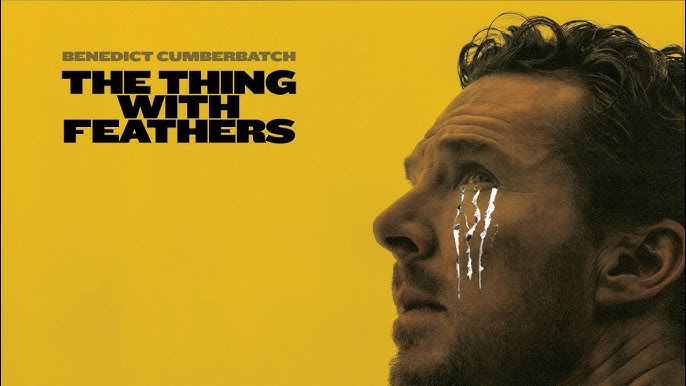
The Thing With Feathers (2024) Review — A Stark and Unflinching Portrait of Grief
The Thing With Feathers is a 2024 British psychological drama that confronts grief in its rawest, most intrusive form. Directed by Dylan Southern and starring Benedict Cumberbatch, the film adapts Max Porter’s acclaimed novella Grief Is the Thing with Feathers into a cinematic experience that is intimate, unsettling, and deliberately uncompromising. Rather than framing grief as a journey toward healing, the film presents it as a presence that arrives uninvited and refuses to leave.
Minimalist in setting yet emotionally expansive, The Thing With Feathers positions itself as a meditative study of loss, masculinity, and parenthood, favoring symbolism and emotional truth over conventional narrative comfort.
Film Overview
| Aspect | Details |
|---|---|
| Title | The Thing With Feathers |
| Release Year | 2024 |
| Genre | Psychological Drama |
| Director | Dylan Southern |
| Lead Actor | Benedict Cumberbatch |
| Runtime | Approx. 100 minutes |
| Setting | Contemporary London |
| Core Themes | Grief, loss, fatherhood, emotional repression |
Plot Synopsis
Life After Sudden Loss
The story follows a father and his two young sons after the sudden death of the children’s mother. The cause of her death is left undefined, emphasizing the shock and emotional void that follows. Their home becomes the central location of the film, a space filled with absence, disrupted routines, and unresolved emotions.
The father, an academic, attempts to impose order on his grief. He maintains routines, focuses on work, and resists emotional vulnerability, believing control will keep his family intact. His sons, however, respond differently—expressing grief through confusion, erratic behavior, and moments of emotional withdrawal.
The Manifestation of Grief
As mourning deepens, a large, crow-like figure enters the household. This presence announces itself bluntly as something born of grief, declaring that it has come to stay. The creature is antagonistic, mocking, destructive, and domineering, yet it also shows moments of protection, particularly toward the children.
The film never clarifies whether this figure is real, imagined, or symbolic. Instead, it functions as an embodiment of grief itself—unpredictable, invasive, and deeply personal.
Emotional Reckoning
The father’s interactions with the crow grow increasingly intense. The creature challenges his authority, mocks his intellect, and exposes the fragility beneath his controlled exterior. These confrontations force him to acknowledge emotions he has long suppressed, particularly fear, rage, and guilt.
The children observe and react to the presence differently, sometimes frightened, sometimes accepting. Their relationship with the crow suggests that grief interacts with innocence in ways it does not with adulthood.
An Ending Without Closure
The film’s conclusion avoids resolution. Grief does not disappear, nor is it defeated. Instead, it evolves. The crow’s presence becomes less overwhelming, signaling a shift from raw devastation to a quieter, ongoing coexistence. The family moves forward altered, not healed.
Themes and Analysis
Grief as an Inescapable Force
At its core, The Thing With Feathers reframes grief as something active rather than internal. The crow represents mourning as an occupying force—one that disrupts sleep, damages physical space, and refuses to respect boundaries. This metaphor strips grief of sentimentality, portraying it as both cruel and necessary.
The film argues that grief cannot be managed through discipline or rational thought. Attempts to suppress it only intensify its presence.
Masculinity and Emotional Control
The father’s struggle reflects broader cultural expectations placed on men to remain composed and functional in the face of trauma. His reliance on intellect and authority becomes a form of denial, and the crow systematically dismantles these defenses.
The film suggests that emotional suppression is not strength, but avoidance—and that grief demands vulnerability, even when it feels destructive.
Childhood and Mourning
The children’s grief is portrayed as instinctual rather than verbal. Their emotional shifts are sudden and physical, highlighting how children process loss without language or logic. The crow’s comparatively gentler behavior toward them implies that grief adapts to those who cannot yet intellectualize pain.
This contrast deepens the film’s emotional complexity, showing how the same loss fractures individuals in profoundly different ways.
Performances
Benedict Cumberbatch
Benedict Cumberbatch delivers a deeply restrained performance, relying on silence, physical tension, and emotional withdrawal rather than overt expression. His portrayal captures the exhaustion of grief—the way it erodes patience, identity, and certainty over time.
His exchanges with the crow function as psychological confrontations, revealing layers of fear and vulnerability beneath a composed exterior.
Supporting Performances
The child actors bring naturalism and emotional credibility, grounding the film’s abstract elements in lived experience. Their performances prevent the story from drifting too far into allegory, keeping it rooted in human reality.
Direction and Visual Style
Dylan Southern’s direction favors claustrophobic intimacy. The limited setting reinforces emotional confinement, while muted color palettes and controlled framing reflect the characters’ internal states. The camera often lingers, allowing discomfort to settle rather than rushing toward relief.
The crow’s design avoids fantasy excess. Its physicality feels deliberately intrusive, reinforcing the idea that grief is not a metaphor one can escape, but a presence that demands recognition.
Sound Design and Atmosphere
Sound plays a crucial role in shaping the film’s tone. Silence is used aggressively, heightening tension and emotional isolation. When the crow speaks, its voice dominates the soundscape, often overwhelming human dialogue and asserting psychological control.
The score remains minimal, allowing ambient noise and emotional unease to guide the viewer’s experience.
Strengths and Weaknesses
Strengths
-
Powerful and original metaphor for grief
-
Subtle, emotionally precise lead performance
-
Bold, uncompromising narrative approach
-
Strong atmospheric direction and sound design
Weaknesses
-
Abstract structure may challenge mainstream audiences
-
Limited setting can feel emotionally oppressive
-
Minimal exposition requires patience and emotional engagement
Final Verdict
The Thing With Feathers is a demanding but deeply affecting film that refuses to dilute the reality of grief. It offers no easy catharsis and no sentimental reassurance, choosing instead to sit with pain in all its discomfort and contradiction.
Through symbolic storytelling, restrained performances, and emotional honesty, the film captures grief as something endured rather than overcome. For viewers willing to engage with its abstract language and emotional intensity, The Thing With Feathers stands as a haunting, thoughtful meditation on loss, love, and survival.