Bhabiji Ghar Par Hain!: From Television Phenomenon to the Big Screen
The landscape of Indian sitcoms has seen many contenders, but few have managed to capture the cultural zeitgeist quite like Bhabiji Ghar Par Hain!. Originally debuting on &TV in 2015, the show became a cornerstone of modern Indian satire, blending regional humor with the timeless “loving thy neighbor” trope. As the franchise transitions into a feature film format, it brings with it a decade of legacy, a dedicated fanbase, and the challenge of expanding a 22-minute episodic structure into a cohesive cinematic experience.
This article explores the journey of the Bhabiji Ghar Par Hain! movie, analyzing its narrative shift, the evolution of its iconic characters, and its impact on the comedy genre in Indian cinema.
Film Overview and Production Details
| Feature | Details |
| Title | Bhabiji Ghar Par Hain! |
| Genre | Satirical Comedy / Family Drama |
| Director | Shashank Bali |
| Cast | Aasif Sheikh, Rohitash Gaud, Shubhangi Atre, Vidisha Srivastava |
| Runtime | 138 Minutes |
| Language | Hindi |
| Production House | Edit II Productions |
The Premise: A Neighborhood Rivalry Expanded
The core of Bhabiji Ghar Par Hain! has always been the harmless yet hilarious rivalry between two neighbors: Vibhuti Narayan Mishra and Manmohan Tiwari. In the television series, the plot revolves around their mutual, secret admiration for each other’s wives—Anita (the “Modern” Bhabiji) and Angoori (the “Traditional” Bhabiji).
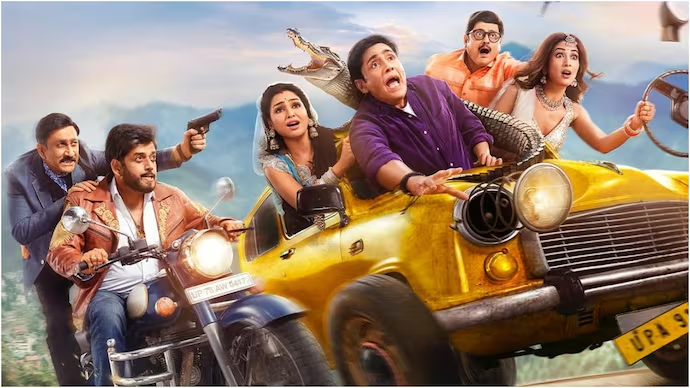
The film adaptation takes this domestic setup and elevates the stakes. Instead of the familiar Modern Colony backdrop, the narrative pushes the characters into a high-stakes situational comedy involving an inheritance plot and an accidental international blunder. This transition allows the film to maintain its signature banter while utilizing a larger budget for outdoor sequences and more complex set pieces that the daily soap format couldn’t accommodate.
Plot Synopsis
The film begins with the familiar rhythm of Kanpur life. Manmohan Tiwari (Rohitash Gaud) is struggling with his undergarment business, while the “unemployed” Vibhuti (Aasif Sheikh) continues to loiter with poetic flair. The inciting incident occurs when a distant relative of Tiwari leaves behind a massive estate in a will, but with a catch: the two families must live together in a remote, supposedly haunted mansion for thirty days to claim the fortune.
What follows is a comedy of errors. Vibhuti sees this as an opportunity to spend more time near Angoori (Shubhangi Atre), while Tiwari hopes to impress Anita (Vidisha Srivastava) with his newfound “nobility.” However, the mansion hides secrets of its own, involving a local smuggling ring that the two protagonists accidentally stumble upon. The climax moves away from the living room politics and into a chaotic, slapstick finale that tests the friendship and the marriages of the two couples.
Character Analysis: Depth Beyond the Catchphrases
The Protagonists
-
Vibhuti Narayan Mishra (Aasif Sheikh): Sheikh continues to be the soul of the franchise. In the film, his character is given more room to showcase his versatility. His linguistic prowess and “Nalla” persona are weaponized for comedic effect, but the film also touches on his genuine, albeit misplaced, romanticism.
-
Manmohan Tiwari (Rohitash Gaud): Gaud’s portrayal of the stingy, traditional businessman remains grounded. His chemistry with Sheikh is the film’s strongest asset; their “frenemy” dynamic drives the pacing during the slower second act.
The Leading Ladies
-
Angoori Bhabi (Shubhangi Atre): The film retains Angoori’s innocence and her iconic “Sahi Pakde Hain” catchphrase. However, the screenplay gives her a moment of agency in the third act, allowing Atre to play a version of the character that is slightly more aware of the chaos surrounding her.
-
Anita Bhabi (Vidisha Srivastava): Known as “Lady Don,” Anita provides the much-needed voice of reason. Her role in the film is more action-oriented compared to the TV show, as she often becomes the one to bail the men out of their self-inflicted troubles.
Technical Execution: Direction and Cinematography
Director Shashank Bali, who has been at the helm of the TV series since its inception, understands the rhythm of these characters better than anyone. His transition to the director’s chair for the feature film is seamless, though he occasionally struggles with the “long-form” pacing.
The cinematography by Raja Satankar departs from the flat, brightly lit aesthetic of a television set. The film utilizes a warmer color palette and more dynamic camera movements, particularly during the “mansion” sequences. The use of wide shots helps establish the scope of the new locations, making the world of Kanpur feel larger and more lived-in.
Critique: Strengths and Weaknesses
Strengths
-
Cultural Resonance: The film excels in its use of “Kanpuriya” dialect and local mannerisms. It doesn’t try to be a sophisticated urban comedy; it leans into its roots.
-
Ensemble Performance: Beyond the leads, the supporting cast—including Happu Singh and the duo of Teeka-Malkhan—provide consistent laughs. Their subplots are woven into the main narrative with better cohesion than the episodic format usually allows.
-
Satire: The film subtly mocks social pretenses, middle-class greed, and the absurdity of “get-rich-quick” schemes.
Weaknesses
-
Padding: At 138 minutes, the film feels slightly stretched. Certain comedic sequences, while funny, do not necessarily move the plot forward, making it feel like three TV episodes stitched together at times.
-
Over-reliance on Tropes: If you aren’t a fan of the show’s specific brand of humor—repetitive catchphrases and slapstick—the film offers little to convert a new audience. It is a “fans-first” production.
Comparative Analysis: TV vs. Film
| Feature | TV Series | Feature Film |
| Pacing | Fast-paced, episodic | Slower, narrative-driven |
| Visuals | Standard Multi-cam | Single-cam Cinematic |
| Conflict | Domestic/Social | Adventure/Action-Comedy |
| Tone | Pure Satire | Satire mixed with Thriller elements |
Final Verdict
Bhabiji Ghar Par Hain! as a film is a celebration of a decade of laughter. It succeeds in scaling up the world of Tiwari and Vibhuti without losing the heart of what made the show a household name. While it may occasionally stumble under the weight of its own runtime, the performances—particularly from Aasif Sheikh and Rohitash Gaud—ensure that the landing is as humorous as the takeoff.
It is a rare example of an Indian sitcom successfully making the jump to the silver screen while maintaining its identity. For fans, it is an essential watch; for newcomers, it serves as a vibrant, if chaotic, introduction to the quirks of Modern Colony.